
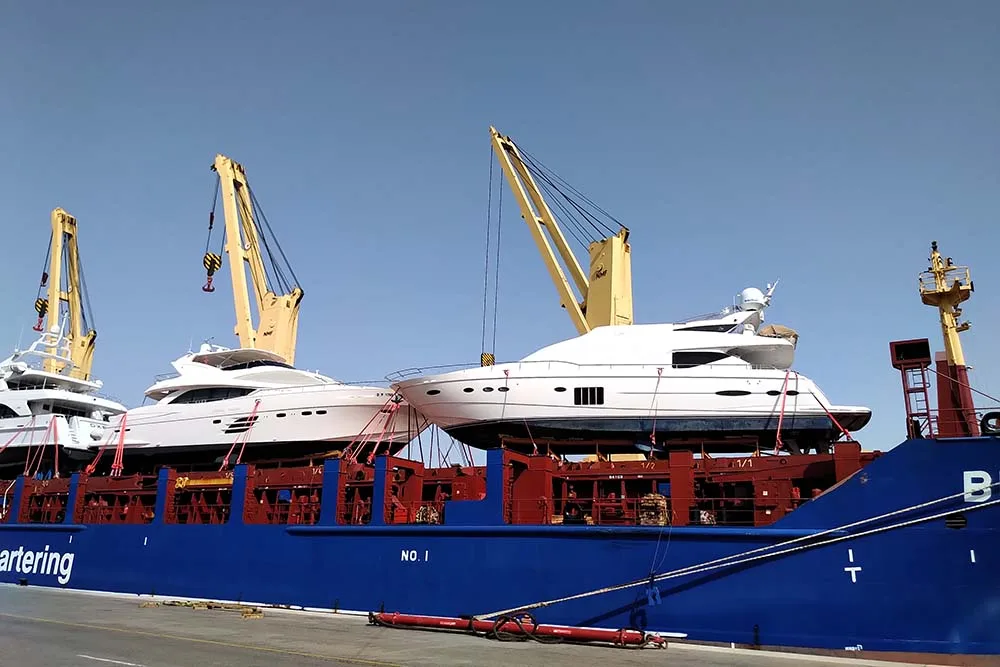
As a rule, every yacht shipped with Cigisped is followed by an independent surveyor.
The surveyor keeps a close eye on the operation and reports on the state of the yacht on both sides of the voyage: just before it is loaded, and again once it is discharged. Nobody involved in the job writes it, which is the point: everyone gets one neutral account of how the operation was carried out.
One record, three readers
Sees the state the yacht left in and the state it arrived in, set side by side with photos.
Has a fair account of the lift and the lashing, rather than one side's word against the other.
Gets the evidence it needs to handle a claim, starting with what was already there before loading.
Photos, plus a written annex
The report is built around photos of the yacht before loading and after discharge. With it comes a written annex that records the times of the operations, the ship's particulars and the gear that was used.
Marks that were on the yacht before the move are noted as well, so they can't later be confused with new damage.
- Yacht, port and date
- Ship's particulars
- Lifting gear used
- Time of each step
Where the surveyor looks
Hull and finish
Gelcoat or paint, with every existing scratch, chip and scuff photographed before the lift.
Below the waterline
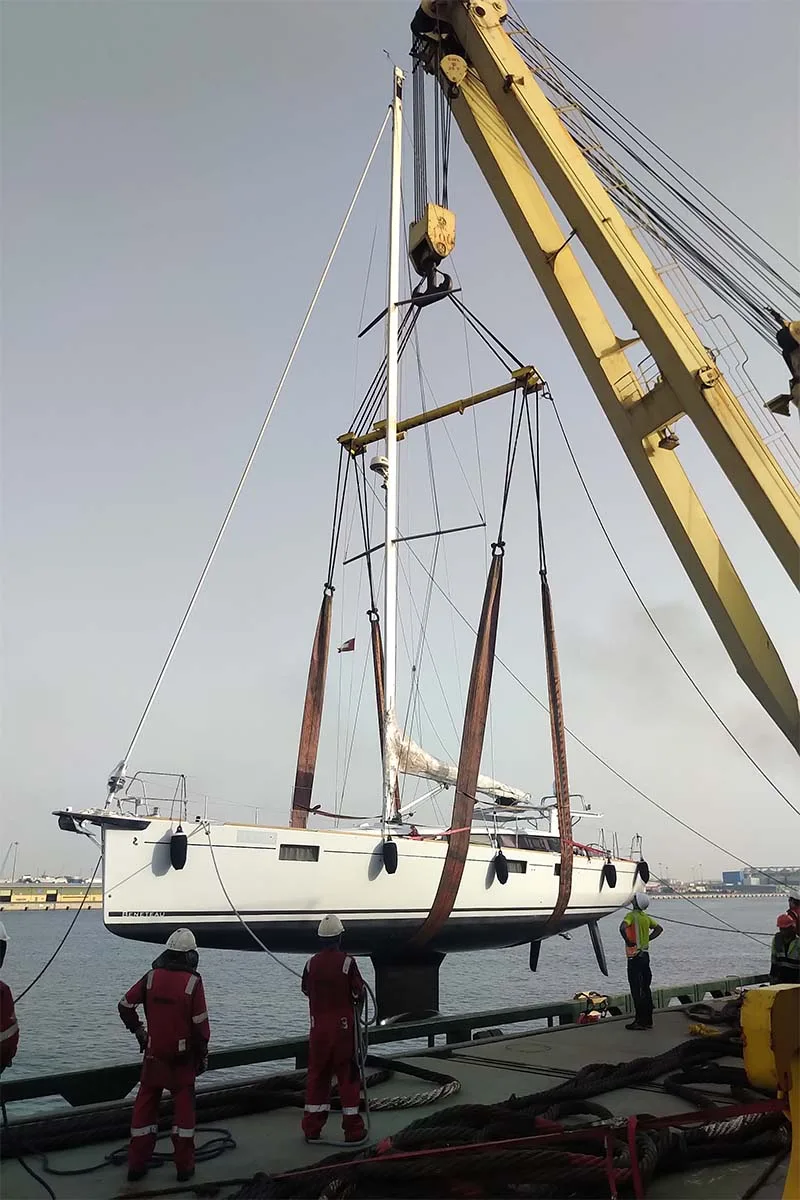
Keel, rudder, propellers, shafts and stabiliser fins, which are best seen while the yacht hangs in the slings.
Deck and topsides
Windows, rails, antennas, the radar arch and anything else that stands out from the boat.
Lifting and securing
Sling and cradle pad positions against the lifting plan, then the lashing on deck before sailing.
The clock starts at discharge
Under the Hague-Visby Rules, where they apply to the carriage, timing decides a lot.
- At loading
The bill of lading records the apparent order and condition of the cargo. A survey before loading backs that up with photos.
- At discharge
Damage has to be reported to the carrier in writing before the yacht is taken away, or within 3 days if it can't be seen. Without that, the yacht counts as delivered as described in the bill of lading. No notice is needed if a joint survey was made when the yacht was received.
- Within 1 year
A claim against the carrier has to be brought within a year of delivery, unless both sides agree to extend it.
Source: Hague-Visby Rules, Article III. A yacht carried on deck may fall outside these rules, which is one more reason to have a solid record and the right transport insurance.
Questions about the survey report
Who is the surveyor working for?
No party in the transport. The surveyor is independent, so the report stays neutral for the owner, the carrier and the insurer alike.
Isn't that what the loadmaster does?
Our loadmaster guides the operation on the yacht's behalf. The surveyor doesn't steer anything, and only watches and records.
Is this the same as a pre-purchase survey?
No. It records the yacht's condition around the transport. It is not a full technical inspection or a valuation of the yacht.
What if the report shows new damage?
The damage is noted in writing at discharge, in front of the carrier's people at the port, and the report goes to the insurer with the claim. We help you with both steps.
Want an independent condition report before and after loading? Tell us where and when your yacht is being shipped.
Book a survey