
Ships keep tight schedules, and customs should never be the reason a yacht waits on the quay.
Before a boat is transported, you need a clear picture of the procedures, the documents, the dues and every related cost. Sorting that out early is what lets the clearance run alongside the shipping instead of holding it up.
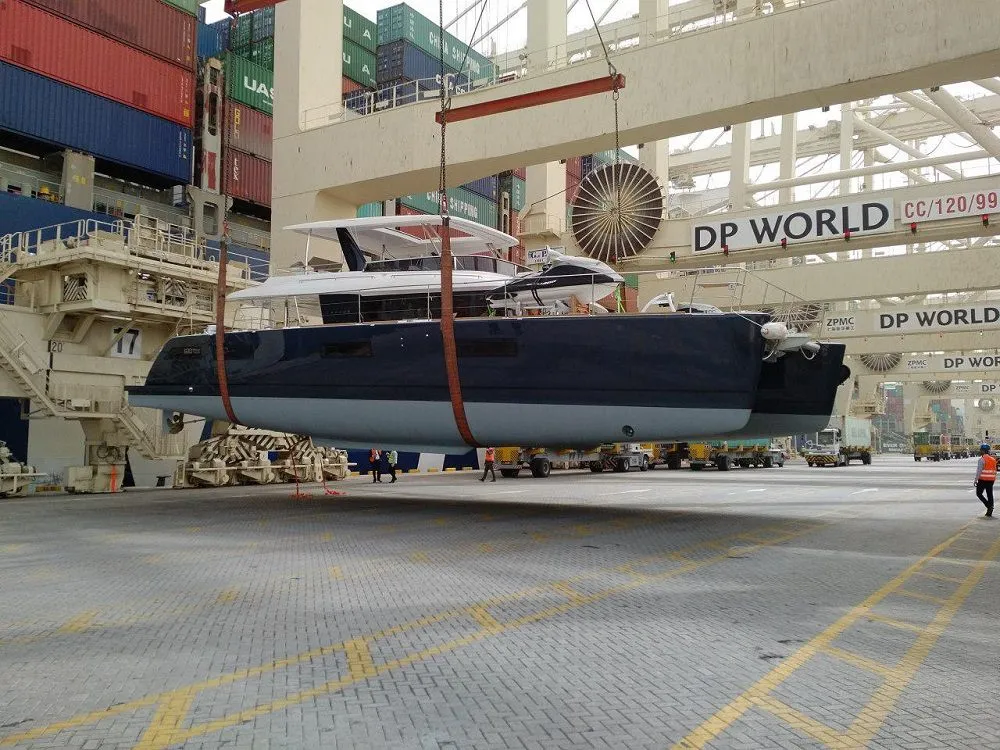
Water first, or quay first
How the yacht leaves the ship decides how early the paperwork has to be done.
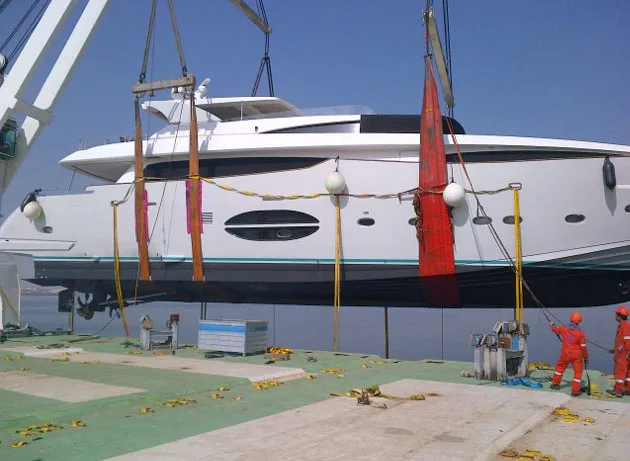
Straight into the water
The yacht is lifted off the ship and set down in the water, ready to sail away. For that to happen, customs has to be cleared before the ship arrives, since there is no time or space to finish it afterwards.
Unloaded on the quay
The yacht is discharged onto the pier or quayside first. Sooner or later, each port starts charging storage under its own rules, so the clearance still has to move fast to avoid fees and penalties that serve no purpose.
Four ways a yacht can enter the UAE
What the duty and VAT come to
Duty is charged on the CIF value: the price of the yacht plus freight and insurance to the UAE. Import VAT is then charged on that value with the duty added. Port, handling and broker fees come on top and depend on the case.
A business registered for VAT in the UAE usually accounts for import VAT through the reverse charge on its tax return instead of paying it at the border.
An estimate for a yacht imported for good. It doesn't apply to temporary admission or to a visiting yacht with a Dubai Maritime Authority letter.
Documents for an import by sea
Dubai Customs asks for
- Bill of lading
- Commercial invoice
- Certificate of origin
- Packing list
- Delivery order from the shipping line
- Permit from the competent authority, where the goods need one
We ask you for
- The yacht's registration certificate
- Proof of ownership, such as the bill of sale
- Its value, for the invoice and the insurance
- Whether it stays in the UAE or leaves again
How we handle it
We work with experienced customs brokers who know the import and export procedures well and keep each clearance as short as it can be. Before the yacht moves, you get the list of documents to prepare and the costs to expect, so that everything is ready when it's needed.
For an export, clearance is part of the plan too, together with jobs such as flag deletion when the yacht changes registry.
- Before loadingDocuments, dues and the right customs procedure agreed with you
- Before arrivalThe declaration lodged, so the yacht can be released on discharge
- At dischargeReleased into the water or off the quay without waiting
- Onward tripExport, transit and import papers for the next leg by road
Customs in other countries
Each destination has its own rules on duty, temporary stays and permits. They are covered on its own page.
Questions about yacht customs
Can the yacht be cleared before it arrives?
Yes. Dubai Customs allows a declaration to be cleared before the goods arrive, as long as all the essential details are on it. That is how a yacht can go straight into the water on discharge.
Do I pay the 5% duty on a visiting yacht shipped to Dubai?
Not if the Dubai Maritime Authority issues its letter of undertaking to Dubai Customs. It is applied for through a licensed marine agent, with the bill of lading number and the customs broker's details.
Is VAT payable on top of the duty?
On an import for good, yes. Import VAT is 5% and is worked out on the value of the yacht including the duty. VAT registered businesses usually account for it through the reverse charge.
What happens if clearance is late?
If the yacht is waiting on the quay, the port starts charging storage under its own rules, and a direct delivery into the water can't take place. That is why we start on the papers before the yacht is loaded.
Shipping a yacht in or out of the country? Tell us the route, and we'll list the documents, dues and steps before the boat moves.
Ask about customs