
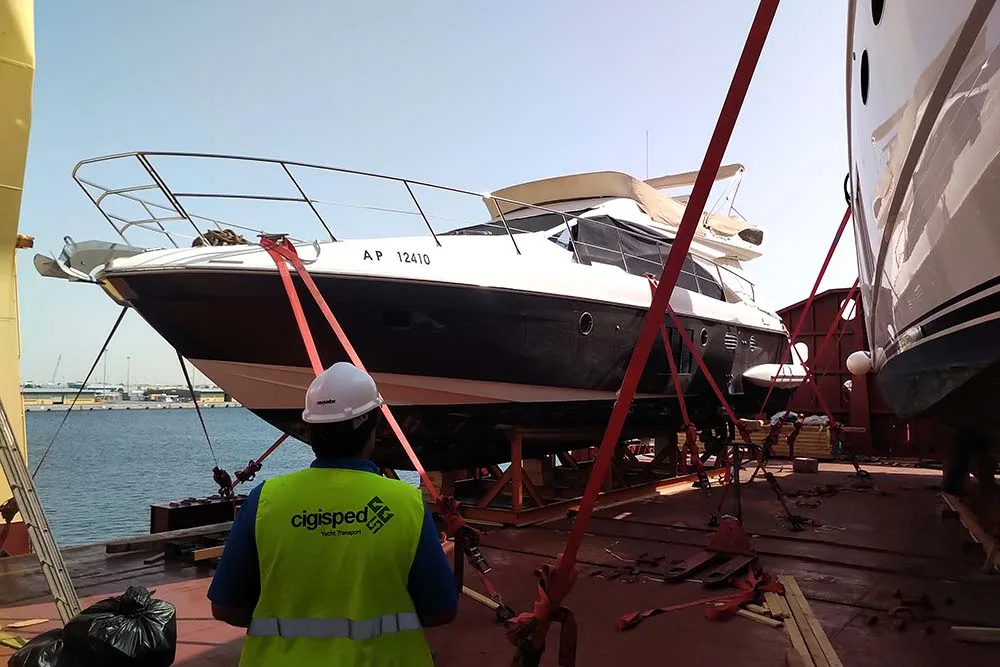
Out of the water, a yacht has to rest on something that follows its hull. That is what a transport cradle is for, and it decides how the load travels through the boat for the whole trip.
Our cradles are designed around the shape of each hull. The keel takes most of the weight, while two rails running fore and aft under the hull share out what is left. No support ends up pushing hard into one patch of the hull, which matters most at sea, when the ship rolls and the load keeps moving.
We rent the cradle for the voyage. You don't have to buy a heavy steel frame and then find somewhere to keep it once the yacht is back in the water.
- Shaped to your hull
- Rented for the trip
- One cradle for ship and truck
What holds your yacht
Where each support goes is planned from the yacht's drawings. The pads should meet the hull where it is built to carry load, along its frames and bulkheads, and stay clear of anything fitted below the waterline.
- Keel blockSits under the keel, the strongest line of the hull, and carries the biggest share of the weight.
- Fore and aft railsTwo bearers along the bottom, one each side of the keel, that pick up the rest of the load.
- Padded facesA softer layer between frame and hull, so bare steel never touches the gelcoat or paint.
- Side supportsKeep the yacht upright. They are set against the hull once it has come down onto the cradle.
- Fixing to the deckThe frame is welded or lashed to the ship's deck, or strapped to the trailer on the road.
Three hulls, three layouts
Motor yachts
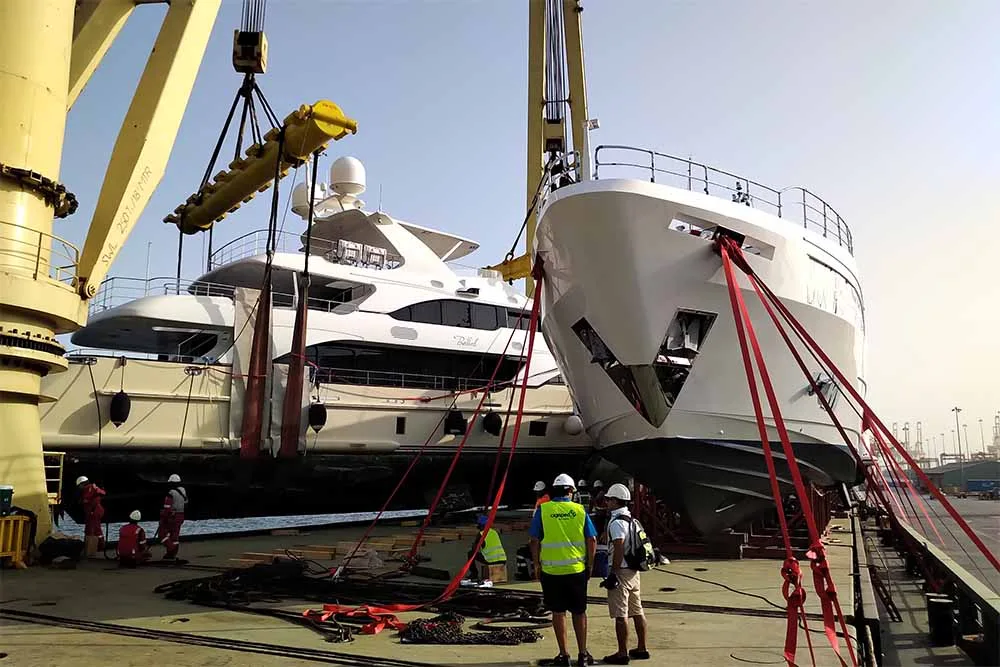
The bottom is fairly wide, and a lot of the weight sits in the engines. Pads follow the hull lines on either side of the keel, with gaps left for shafts, propellers, stabiliser fins and transducers.
Sailing yachts
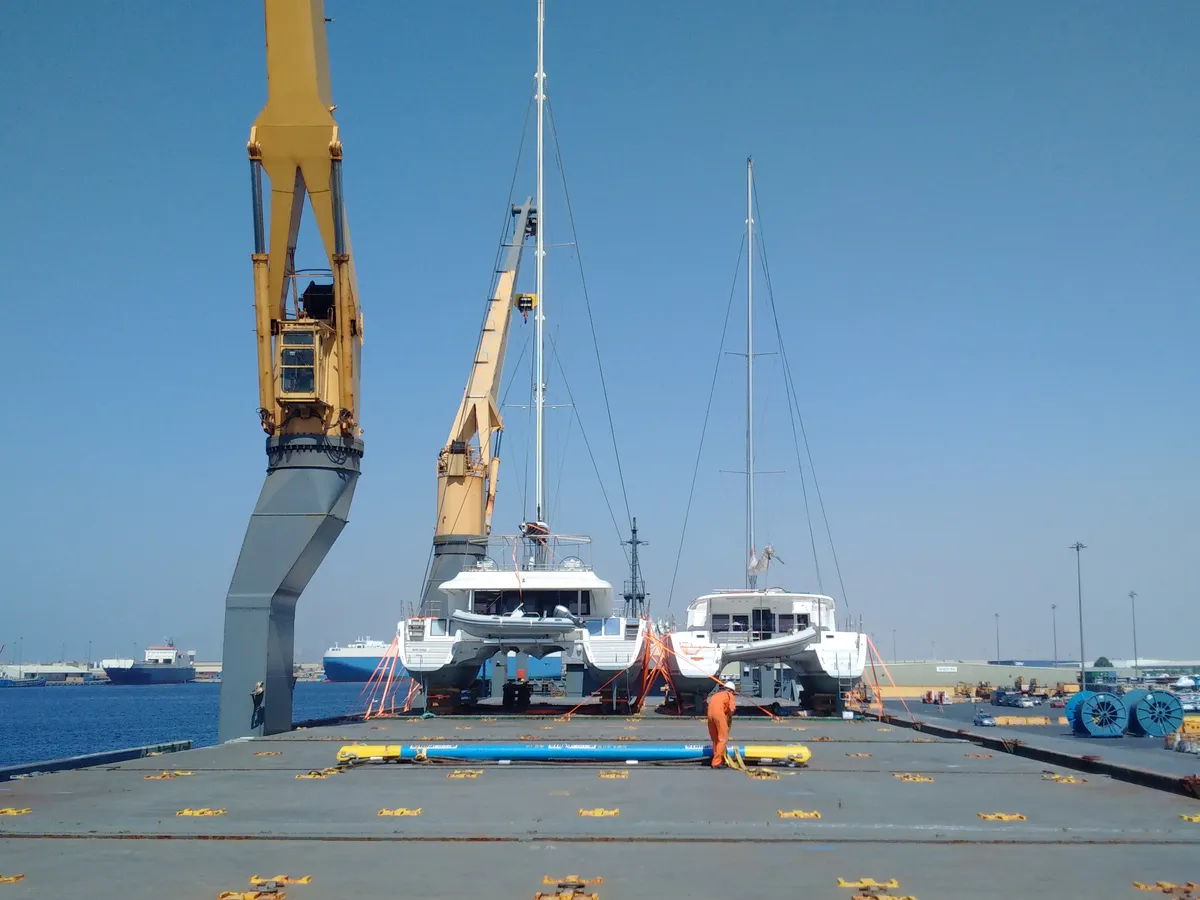
The ballast is in a deep, narrow keel, so the keel block does most of the work. The hull itself is light and can't balance on that one line, which is why the side supports carry more of the job here.
Catamarans
Two hulls means two lines of support. Each hull gets its own bearers, set at the same height, so the bridge deck between them carries no strain on the way.
The cradle's trip, start to finish
- 01Planned on paper
Size, layout and pad positions are worked out from the drawings before the yacht reaches the port.
- 02Waiting on deck
The cradle is placed and fixed on the ship, or set on the trailer, before the yacht arrives.
- 03Set to the hull
As the yacht comes down, pads and side supports are adjusted to it under the eye of our loadmaster.
- 04Lashed for the voyage
Yacht and cradle are secured together, so they move with the ship as one.
- 05Back to us
After discharge the yacht is lifted off and the cradle returns to us. Nothing for you to store.
What we need from you, and why
Keep these details handy: the same information about the yacht and the equipment used is asked for when arranging transport insurance. For the rest of the preparation, see our tips on getting a yacht ready for transport.
Questions about cradles
My yacht already has a cradle. Can it be used?
Send us photos and drawings of it. If it suits the hull and the voyage, it can travel with the yacht. If it doesn't, we'll supply one.
Does the cradle stand loose on deck?
No. It is welded or lashed to the deck, so the yacht and its cradle can't shift when the ship rolls.
Do I need a separate cradle for the truck?
No. The same cradle can carry the yacht on the trailer and then on the ship, whether the trip is by sea, by road or both.
What happens to the cradle after delivery?
It comes back to us. The cradle is rented for the trip, so once the yacht is lifted off, you have nothing left to store or ship home.
Need a cradle for your yacht? Send us its dimensions or plans, and we'll have one ready for the trip.
Request a cradle