
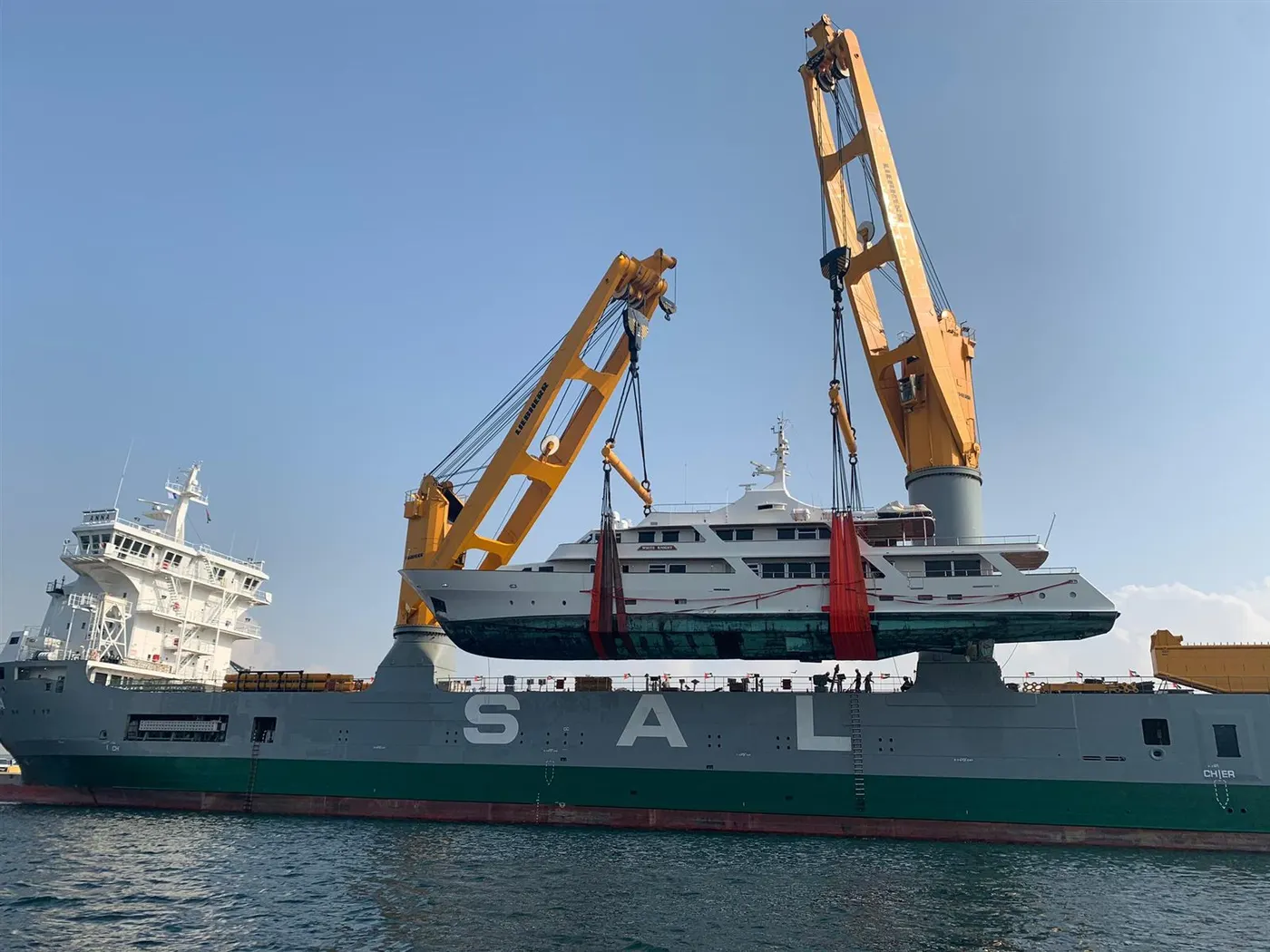
We have the skills and the resources to move industrial plant of any kind, from a single oversize piece to a complete system.
Behind it are decades of experience. Each project is assessed by qualified staff and routed with the carrier best suited to it, chartering all or part of a specialised ship when the cargo calls for it.
How a project moves
- 01Assessment
Weights, dimensions, lifting points and deadlines are studied before anything is booked.
- 02Route and carrier
The project is routed with the carrier that suits the cargo best, not the one that happens to be available.
- 03The right ship
A regular service, or a full or part charter of a ship built for this kind of cargo.
- 04Discharge and jobsite
Our agency network in the main markets manages the unloading and follows the delivery all the way to the site.
Heavy lift
Pieces too heavy for ordinary port cranes, lifted with the ship's own heavy gear, often two cranes working together.
Oversize cargo
Loads larger than a standard container or truck allows. At sea they travel on deck or on flat racks, and on land they need road permits and planned routes.
Module movements
Large units built and assembled in one place and shipped whole to the site, so less work is left for the field.
Full charter or part charter
With a full charter, the whole ship works for one project, on its schedule and its route. With a part charter, the project shares the ship with other cargo, which can bring the cost down when the timing fits.
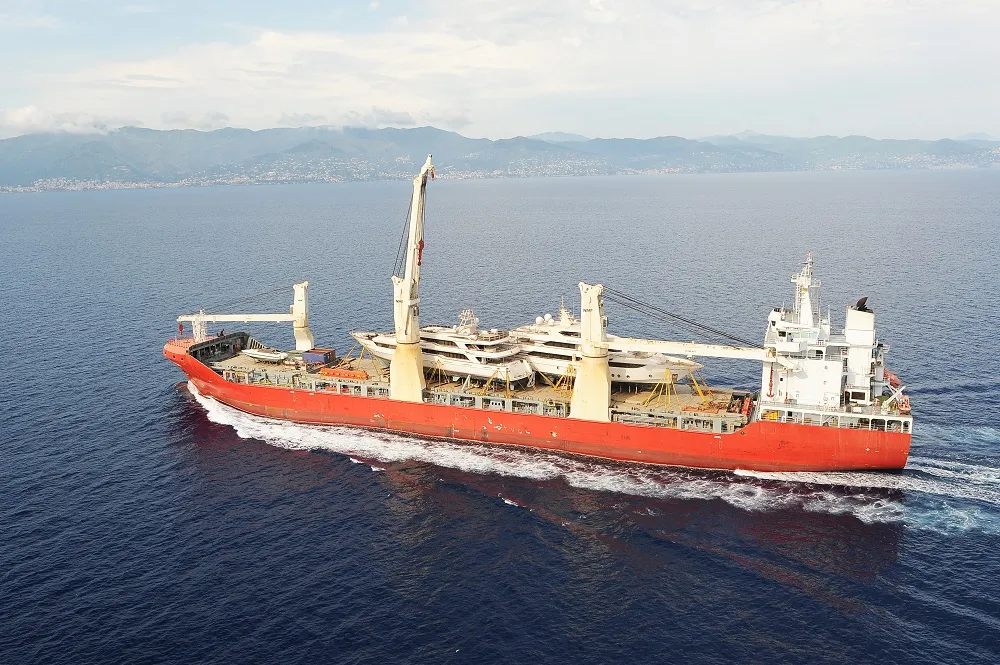
The choice of ship follows the cargo. Geared heavy lift ships load with their own cranes, while very heavy, wide loads may need a semi-submersible ship that floats them on, the same principle used for float on/float off yacht transport.
BIMCO's contract for heavy and voluminous cargo, made mainly for semi-submersible ships, where cargo almost always travels on deck and is often the only cargo on board.
BIMCO's voyage charter for the mid-sized heavy lift sector carrying specialist cargo.
HEAVYCON works on a knock for knock basis, where each side carries its own losses, so the cargo owner's own insurance matters. Source: BIMCO.
Shipping dangerous goods
Years of moving dangerous goods, and of coordinating services for restricted goods, let us give sound shipping advice and handle labelling and packaging. By sea they travel under the IMDG Code, mandatory under SOLAS since 1 January 2004, which sorts them into nine classes.
- 1Explosives
- 2Gases
- 3Flammable liquids
- 4Flammable solids
- 5Oxidisers and organic peroxides
- 6Toxic and infectious substances
- 7Radioactive material
- 8Corrosives
- 9Miscellaneous
DG Shipper's Declaration
We issue the DGD in line with the rules in force, including IATA requirements and the Dangerous Goods Regulations for air freight. We keep up with the strictest rules for these goods.
What we plan around
- Changes in temperature
- Changes in pressure
- Humidity
- Vibration
- Improper handling
Any of these can change how a dangerous substance behaves, so they are part of the plan from the start.
Questions about project cargo
What counts as project cargo?
Shipments too large, heavy or complex for normal container or breakbulk handling: industrial plant, machinery, modules and other pieces that need their own plan.
When does a full charter make sense?
When the project fills most of a ship, needs a fixed date, or has to reach a port off the regular routes. Otherwise a part charter on a suitable ship is often the better deal.
Can you deliver all the way to the site?
Yes. Our agencies in the main markets handle the discharge and follow the delivery to the jobsite.
Do you handle dangerous goods in every class?
Yes, in all nine IMO classes, with advice, labelling, packaging and the shipper's declaration.
Moving heavy or oversize cargo? Send us the dimensions, weight and route, and we'll plan the carrier and the handling.
Discuss your project