
We negotiate container contracts with the leading shipping lines and hold reserved space on the main liner services.
Working as an NVOCC, with a wide network of agencies in the world's main ports, Cigisped offers the same service standards and reliability as the big liner companies. Your goods are tracked with digital tools for the whole voyage, from the port of departure to the final destination.
What being an NVOCC means for you
An NVOCC sells ocean transport to the public and issues its own house bill of lading, but doesn't run the ships. Towards the shipping line it acts as the shipper. For you, that means one contract, one bill of lading and one point of contact, with the space bought from the big carriers.
Definition: US Federal Maritime CommissionContainers and cargo we ship
Shipping a boat? Inside sizes for 20 ft and 40 ft boxes are on our shipping methods page.
No verified weight, no loading
Since 1 July 2016, SOLAS has required every packed container to have a verified gross mass before it goes on board. The shipper provides it in a signed document, either by weighing the packed box or by adding up the weight of everything inside plus the container's own weight. Without it, the container stays on the quay.
Source: IMO, SOLAS regulation VI/2Customs assistance
Clearance and controls
Customs officers with years of experience handle import and export operations as fast as the rules allow. They also look after health and dangerous goods paperwork and radiometric controls.
In affiliated ports we offer pre-clearing, which cuts out the waiting at the port so the container can be delivered right after discharge.
Advice on the rules
A dedicated team follows changes in EU and non-EU regulations. Companies trading abroad can ask us about currencies, taxation, import bans, visas and certificates, octroi exemptions and domiciliation.
Documents we obtain
- Import and export authorisations
- Licences
- Certificates of origin
- Visas and legalisations
- Fumigation
For yachts, customs work follows its own procedures: see yacht customs clearance.
Import and export declarations
Customs is a large part of international trade, and we give it the attention it needs. Export declarations are filed on time and accurately, which matters most when goods are inspected, and import declarations get the same care.
Temporary imports and exports are watched closely, and we remind the parties well before each customs deadline.
Customs work has become simpler in recent years. Most procedures are now computerised, and controls are selective and automated, so shipments are checked according to their level of risk.
Cross trade
Trade is more global every year, and many shipments never touch the country they are sold from. Our cross trade service moves goods door to door between other countries, by sea, by air or by land.
It shortens transit times and brings real savings. It covers any destination and every container type listed above, through our network of partners around the world. Larger, heavier pieces are handled as project cargo.
- Sea
- Air
- Land
Questions about container shipping
What is the difference between FCL and LCL?
With FCL you book a whole container for your goods. With LCL your goods share a container with other shipments, and you pay for the space they take up.
Who provides the verified gross mass?
The shipper. It has to be on a signed shipping document and reach the ship and the terminal in time for the stowage plan.
Can you ship dangerous goods?
Yes, in IMO containers. The goods have to be classified, packed, labelled and declared under the IMDG Code, and we help with that paperwork.
Can a boat go in a container?
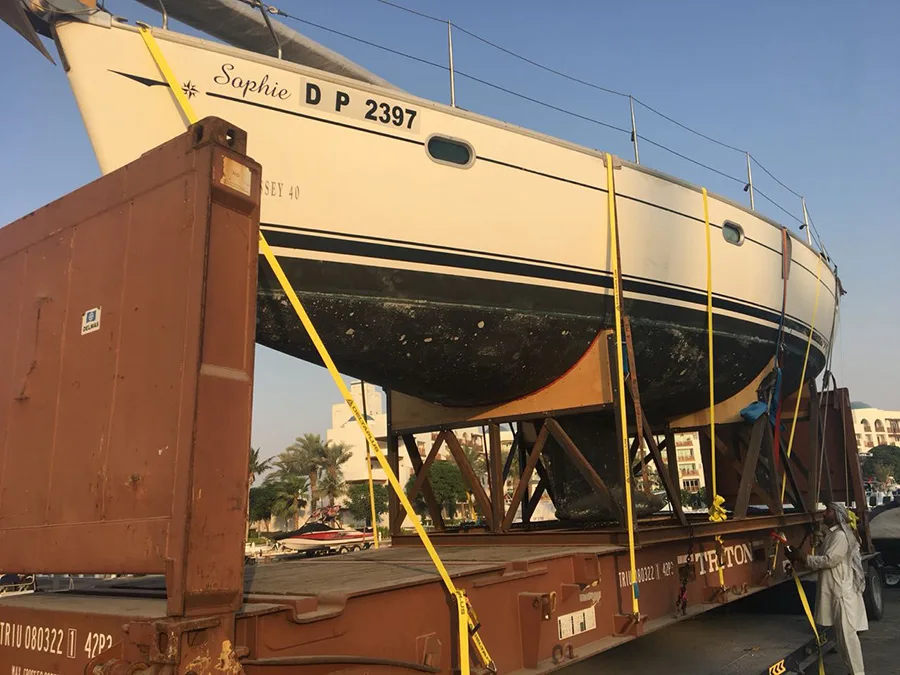
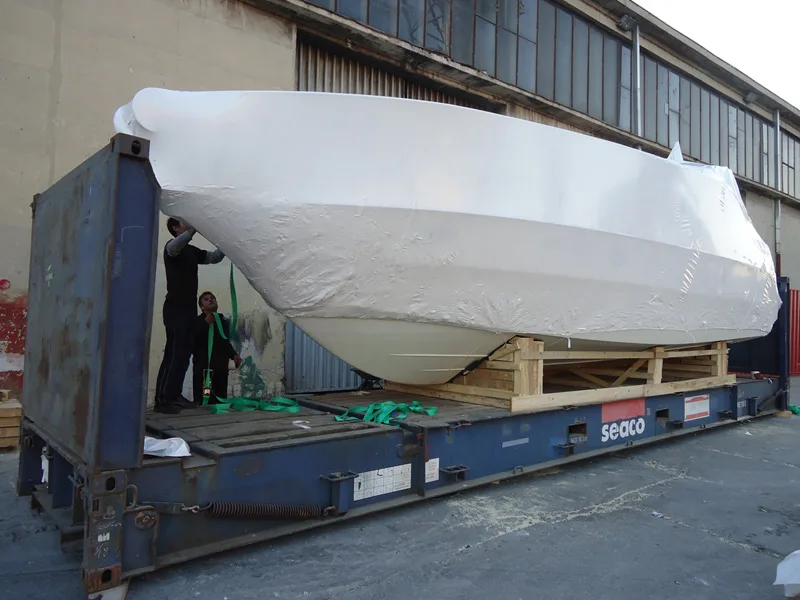
Smaller boats often travel on a flat rack or in an open top container. If yours is larger, our yacht shipping methods show the other options.
Shipping a container? Tell us the cargo, origin and destination, and we'll check space on the main liner services.
Get a container quote